EU Carbon Market Reform: France Lobbies for Aviation Status Quo
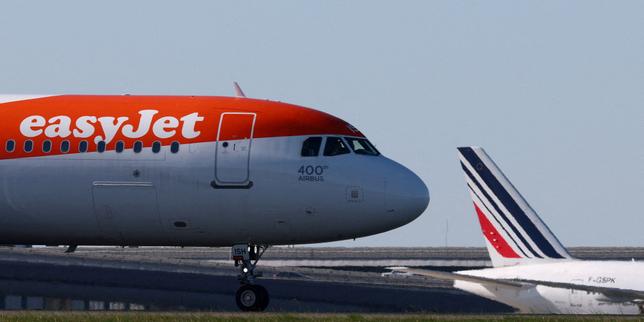
France is working behind the scenes to block any extension of CO₂ taxation in air transport. According to documents seen by Le Monde, Paris is attempting to rally as many member states as possible to its position of refusal before the mid-July presentation of a proposal to reform the European Union Emissions Trading System (EU ETS).
This diplomatic offensive comes at a critical juncture. The European Commission is due to unveil its revision of the emissions allowance trading mechanism — a cornerstone of the continent's climate strategy — in the coming weeks. Aviation, currently a beneficiary of free allowances and excluded from the carbon offsetting system for international flights, represents one of the most sensitive issues in this dossier. The French position aims to preserve this competitive advantage over extra-European carriers.
The timing of this mobilisation is no coincidence. Negotiations on Fit for 55, the legislative package targeting a 55 per cent reduction in greenhouse gas emissions by 2030, have already exposed fractures within the Union. Southern European states, heavily dependent on tourism, generally share French concerns. Conversely, Nordic countries and the Netherlands are pushing for more ambitious integration of aviation into the carbon market, including through fuel taxation — currently exempted under decades-old international treaties.
In markets, this French resistance reflects a structural tension between climate objectives and economic competitiveness. Listed European airlines — Air France-KLM, Lufthansa, IAG — have seen their valuations suffer in recent years from regulatory uncertainty. The sector displays a significant regulatory risk premium, with price-to-earnings ratios below those of American or Gulf carriers. Maintaining the status quo, should Paris impose it, would provide short-term relief for these issuers, but could also delay investment in sustainable aviation fuels (SAF), deemed essential for sector decarbonisation.
From an investor perspective, the question of sectoral integration into the EU ETS weighs on ESG strategies. Sustainable funds, which now represent more than 40 per cent of assets under management in Europe according to FCA data, apply exclusions or sectoral overweights based on transition trajectories. Permissive climate regulation for aviation could paradoxically harm the sector by making it less eligible for ESG indices and Article 8 or 9 portfolios under the SFDR. The Bank of England and the PRA have also repeatedly highlighted the risk of "greenwashing" linked to overly generous sectoral classifications.
The macroeconomic implications also merit attention. The EU carbon market, whose allowance price exceeded €100 per tonne of CO₂ in 2023 before stabilising around €70, constitutes a major price signal for the entire economy. Its extension to aviation — a sector emitting more than 3 per cent of global CO₂ emissions — would mechanically strengthen demand for allowances and, by extension, their price. This would affect real interest rate curves through the anticipation of carbon inflation, a phenomenon that the Bank of England now explicitly monitors in its macroeconomic projections.
For investors, the French status quo scenario presents an asymmetric risk profile. In the short term, it would support airline margins and limit passenger fare increases. In the medium term, it exposes the sector to a brutal regulatory shock — unilateral taxation, strengthened CORSIA mechanism, or WTO measures on subsidies — in a context where the United States and China are accelerating their own decarbonisation trajectories. The French position, defensive on commercial grounds, could therefore prove costly financially if it delays the sector's structural transition.
The final decision will rest with the EU Council and the European Parliament, with an arbitration expected in the autumn. Markets are already pricing in a significant probability of compromise: maintenance of free allowances until 2026, then accelerated phase-out, coupled with a Carbon Border Adjustment Mechanism (CBAM) extended to air service imports. This middle path, costly for issuers but predictable for investors, remains analysts' baseline scenario.


